Green tea for focus and memory: the calm-focus leaf inside Cognizil
Green tea for focus and memory works differently from a plain coffee jolt: the leaf pairs modest caffeine with L-theanine, an amino acid linked to a calm-yet-alert state, and layers in polyphenol antioxidants. That combination is why green tea leaf earns a place in a daily focus formula like Cognizil — it aims to steady attention rather than spike it, and it supports everyday wellness instead of treating any condition.
Is green tea good for focus and memory? Here is the honest, evidence-led version.
- The short answer
- Green tea is associated with calm, alert focus because it delivers gentle caffeine plus L-theanine; its polyphenols add antioxidant support, but it is not a treatment for any condition.
- The active duo
- Caffeine lifts alertness; L-theanine smooths the edges — together they are studied for steadier attention than caffeine alone.
- Why a formula, not a triple espresso
- A calm-alert profile suits an every-single-day supplement far better than a jittery stimulant dose you would want to skip.
- Where Cognizil fits
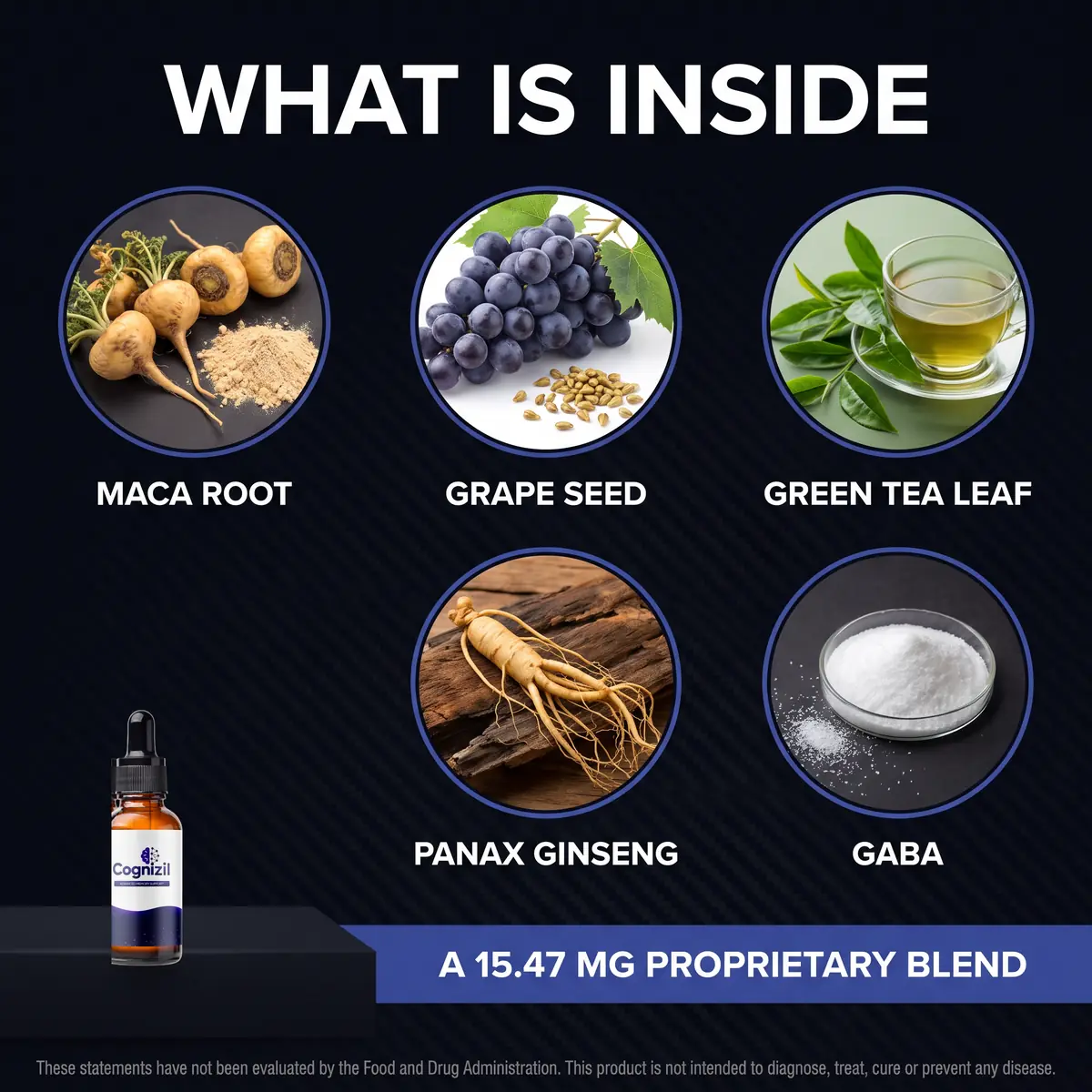
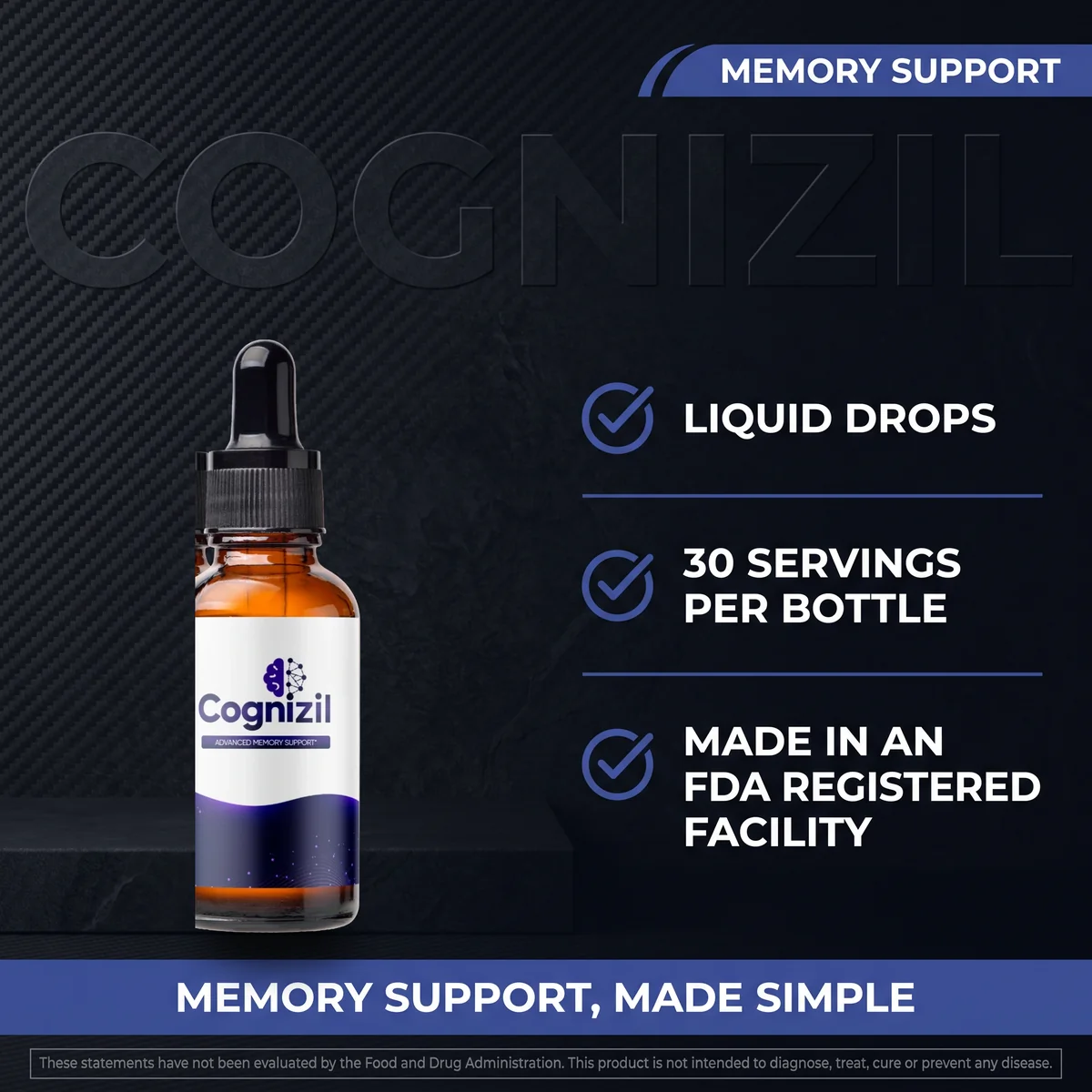
- Green tea leaf sits inside Cognizil's 15.47 mg botanical and amino-acid blend, as low-caffeine liquid drops taken once daily.
Coffee gets the attention, but the quieter cup may be more interesting for anyone chasing steady concentration. Green tea has been sipped for centuries partly because it wakes the mind without the wired feeling strong coffee can bring. This article looks at what is in the leaf, what the calm-focus effect really is, and why that profile fits a once-daily formula like Cognizil rather than an energy shot.
What is green tea and why is it in a focus formula?
Green tea is the minimally oxidised leaf of Camellia sinensis, the same plant that gives us black and oolong tea, prized for a naturally high concentration of polyphenol antioxidants. Because it is steamed or pan-fired soon after harvest rather than fully oxidised, it retains more of its delicate catechins — a family of polyphenols led by EGCG — along with caffeine and L-theanine. That mix of a mild stimulant, a calming amino acid and antioxidants is why the leaf shows up in blends built for everyday mental clarity, not just in the teapot.
In a blend, the leaf is not there to be the loudest ingredient — it contributes a gentle, familiar lift and a load of antioxidants while the rest of the formula handles other roles. The goal is a supplement you can take every day without an afternoon crash, and green tea's temperament fits that brief.
What is L-theanine and how does it create calm focus?
L-theanine is an amino acid found almost exclusively in tea leaves, and it is the single ingredient most responsible for green tea's reputation for calm concentration. Unlike caffeine, which pushes the nervous system toward alertness, L-theanine is studied for encouraging a relaxed-but-awake state — a settled, unhurried kind of focus. One of the trials that established the idea gave healthy volunteers L-theanine and caffeine separately and together, and reported the combination performed differently from either alone on attention-switching tasks (Haskell et al., Biological Psychology, 2008). It is that quality that turns green tea's caffeine from a jolt into a glide.
How does L-theanine work with caffeine?
The pairing of L-theanine and caffeine is one of the more consistently discussed combinations in the focus literature. Caffeine supplies the alertness; L-theanine appears to take the sharp edges off, and several studies have looked at the duo together for steadier attention and fewer of the jittery side effects caffeine can cause on its own. A 2025 systematic review and meta-analysis in Nutrition Reviews found the combination associated with small improvements on some attention measures in healthy participants (Payne et al., Nutrition Reviews, 2025), and an earlier meta-analysis of acute tea constituents reached a similarly modest conclusion (Camfield et al., Nutrition Reviews, 2014). Green tea delivers both in the same sip, at a naturally balanced ratio, which is part of why its lift feels smoother than coffee.
Does L-theanine make you sleepy?
No — that is the point people often miss. L-theanine is linked with relaxation, but it is a calm alertness, not sedation; the aim is a quieter mind that can still concentrate, not one that wants a nap. That is why it belongs in a focus formula: it counterbalances stimulation without cancelling it, leaving a calm-alert state.
What are green tea's brain benefits?
Green tea's brain benefits centre on a calm-alert mental state plus broad antioxidant support, rather than any single dramatic effect. The caffeine-and-L-theanine pairing is associated with steadier attention, while the leaf's polyphenols are a well-known source of antioxidants that the body uses in its everyday defences. Here is a plain-language snapshot of what green tea contributes.
| Component | What it is | General role discussed |
|---|---|---|
| Caffeine | Natural mild stimulant | Supports alertness and reaction time; lower per cup than coffee, so the lift is gentler. |
| L-theanine | Amino acid unique to tea | Associated with relaxed, non-drowsy focus; studied alongside caffeine for steadier attention. |
| Catechins (EGCG) | Polyphenol antioxidants | A rich dietary source of antioxidants involved in the body's normal defences. |
| Antioxidant load | Overall polyphenol content | Part of why green tea is a staple of wellness routines worldwide. |
It is worth being clear about the limits: much of the human evidence is on green tea as a beverage and general wellness, not on isolated doses treating a diagnosis, and NCCIH notes that findings on green tea and health outcomes remain limited (NCCIH). Green tea supports a healthy routine; it does not diagnose, treat or cure anything. For a wider view, see our guide to nootropic ingredients for focus and memory, our profile of guarana as a natural caffeine source, and the counterweight ingredient in GABA for calm, focused energy.
See the exact dose in Cognizil
Cognizil pairs chromium with a 15.47 mg blend — green tea leaf, maca, panax ginseng, GABA and L-tyrosine — as once-daily liquid drops. The six-bottle bundle is the best value at $49 per bottle, with free U.S. shipping and a 180-day guarantee.
Order Cognizil — from $49/bottleWhy does calm-alert focus beat a jittery stimulant?
Calm-alert focus beats a jittery stimulant because attention you can sustain is worth more than a spike you have to recover from. A big hit of caffeine lifts you fast, but often brings a racing pulse, an anxious edge and a crash hours later — the opposite of steady concentration. Green tea's balance of gentle caffeine and L-theanine avoids that arc, which is why it suits a supplement meant for every day rather than an emergency.
The distinction matters for a daily formula. A product you dread because it makes you wired is a product you will quit; a calm, smooth lift is one you can build a routine around.

| Profile | Jittery stimulant | Calm-alert (green tea style) |
|---|---|---|
| Onset | Fast and sharp | Gentle and smooth |
| Feel | Wired, sometimes anxious | Relaxed but awake |
| Caffeine load | High | Modest, buffered by L-theanine |
| Aftermath | Common energy crash | Less of a crash for most people |
| Fit for daily use | Poor — easy to over-rely on | Good — built to repeat |
How does the green tea leaf fit into Cognizil?
In Cognizil, green tea leaf is a supporting player inside a 15.47 mg botanical and amino-acid blend, not a caffeine dose you take for energy. The formula pairs chromium (as chromium picolinate) with a blend of maca, green tea, panax ginseng, GABA and L-tyrosine, delivered as fast liquid drops rather than a pill. Because the leaf is one small component of a once-daily dropper, you get its calm-alert character and antioxidants without the high-caffeine load of an energy product.
That design reflects the whole point of this article: green tea is included for temperament, not intensity. To see the complete panel and how much of each ingredient the dropper delivers, read the full ingredients section or the in-depth Cognizil review.
How do you use green tea for focus safely?
Using green tea for focus safely comes down to moderation and timing. Caffeine, even the gentle amount in tea, is best kept earlier in the day so it does not eat into the sleep that does the real memory work overnight. A few practical habits keep the calm-alert benefit while sidestepping the downsides:
- Keep caffeine moderate and front-loaded — morning and early afternoon, not late.
- Pair it with water and food so the lift is steady rather than sharp.
- Watch your own sensitivity — some people feel even small amounts of caffeine, so adjust to how you actually respond.
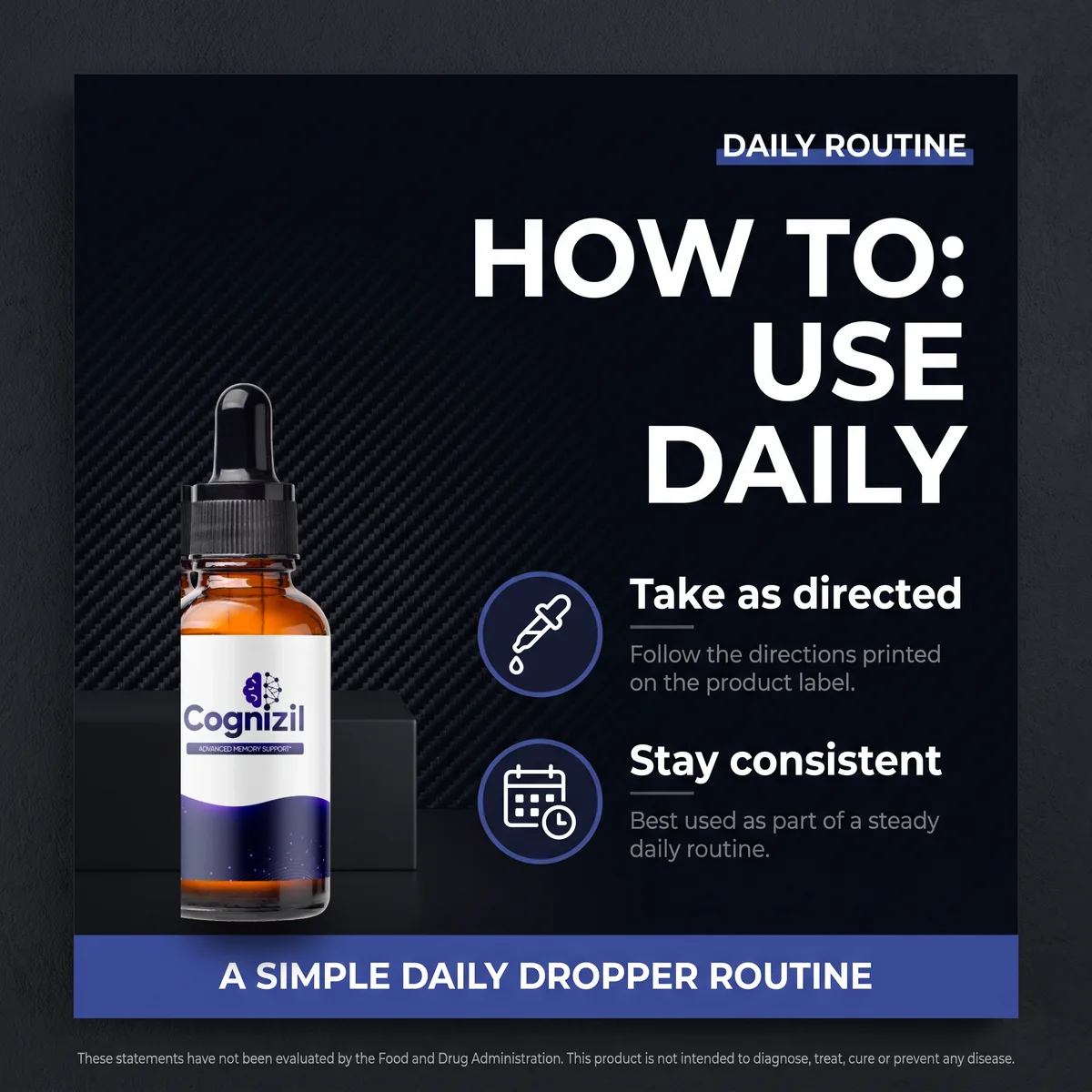
- Take any supplement at the same time daily — for Cognizil, one dropperful, shaken and swallowed.
- Protect your sleep — no leaf or blend replaces the consolidation that happens overnight.
For the bigger picture on the habits that surround any supplement, our guide on how to improve memory and focus naturally covers sleep, movement and diet in detail.
When should you talk to a doctor?
Green tea supplements are for supporting everyday focus, not for treating any condition, so a quick medical check is wise in a few situations. Speak with your doctor before adding one if you are pregnant or nursing, under 18, sensitive to caffeine, take any medication, or have a diagnosed condition — and see a professional for persistent or worsening problems with memory or concentration.
Frequently asked questions
Is green tea good for focus and memory?
Green tea is widely associated with a calm, alert state because it pairs modest caffeine with the amino acid L-theanine, and its polyphenols are a rich source of antioxidants. It supports everyday focus as part of a healthy routine, but it is not a treatment for any condition.
What is L-theanine and how does it help focus?
L-theanine is an amino acid found almost exclusively in tea. It is studied for promoting a relaxed-but-alert state, and when combined with caffeine it is associated with steadier attention and less of the jittery edge caffeine can cause on its own.
How much green tea leaf is in Cognizil?
Green tea leaf is one part of Cognizil's 15.47 mg botanical and amino-acid blend, alongside maca, panax ginseng, GABA and L-tyrosine, delivered as once-daily liquid drops rather than a high-caffeine dose. See the ingredients section for the full panel.
Does green tea cause the jitters like coffee?
Green tea typically contains less caffeine than coffee and delivers it alongside L-theanine, which is why many people describe its lift as calmer and smoother. Sensitivity still varies, so keep intake moderate and earlier in the day.
How long does green tea take to affect focus?
The alertness from caffeine and L-theanine can be felt within an hour, while the antioxidant benefits of regular green tea intake build gradually over weeks. Individual results vary, and consistency matters more than any single cup or dose.
Can I drink green tea and take Cognizil?
For most people a cup of green tea alongside a daily supplement is fine, since the leaf in Cognizil is a small blend component rather than a stimulant dose. If you are sensitive to caffeine, take medication, or are pregnant or nursing, ask your doctor first.
Check today's Cognizil pricing →
Cognizil is a dietary supplement, not a treatment for any medical condition. These statements have not been evaluated by the Food and Drug Administration. This product is not intended to diagnose, treat, cure or prevent any disease. Always consult a qualified healthcare professional about your individual needs.
References & further reading
- National Center for Complementary and Integrative Health (NCCIH). Green Tea. nccih.nih.gov/health/green-tea
- Examine.com. L-Theanine — evidence-based summary. examine.com/supplements/l-theanine
- Examine.com. Green Tea Catechins (EGCG) — evidence overview. examine.com/supplements/green-tea-catechins
- Payne ER, et al. Effects of Tea (Camellia sinensis) or its Bioactive Compounds l-Theanine or l-Theanine plus Caffeine on Cognition, Sleep, and Mood in Healthy Participants: A Systematic Review and Meta-Analysis of Randomized Controlled Trials. Nutrition Reviews, 2025. pubmed.ncbi.nlm.nih.gov/40314930
- National Institutes of Health, Office of Dietary Supplements. Botanical Dietary Supplements — background information. ods.od.nih.gov/factsheets/BotanicalBackground-HealthProfessional
- Haskell CF, et al. The effects of L-theanine, caffeine and their combination on cognition and mood. Biological Psychology, 2008. pubmed.ncbi.nlm.nih.gov/18006208
- Camfield DA, et al. Acute effects of tea constituents L-theanine, caffeine, and epigallocatechin gallate on cognitive function and mood: a systematic review and meta-analysis. Nutrition Reviews, 2014. pubmed.ncbi.nlm.nih.gov/24946991
These references describe the ingredients in general terms and are not evidence that any product treats, cures or prevents any condition.
Keep reading: nootropic ingredients · memory and focus naturally · Cognizil blog · homepage.