GABA for calm, focused energy: how Cognizil uses your brain’s calming signal
GABA, or gamma-aminobutyric acid, is the brain’s main calming neurotransmitter — the signal that quiets over-excited nerves so attention can settle. In Cognizil it is one ingredient in a wider blend, included for a specific reason: to support a relaxed, focused kind of energy rather than the wired alertness a stimulant produces. This guide explains what GABA is, how a settled focus differs from a caffeine buzz, and where it fits in a daily routine.
GABA and calm focus, explained in one place.
- What GABA is
- Gamma-aminobutyric acid, the body’s primary inhibitory (calming) neurotransmitter — the brake pedal to the brain’s accelerator.
- Why it’s in Cognizil
- To support a settled, relaxed focus as part of a 15.47 mg botanical and amino-acid blend, not as a treatment for any condition.
- Calm vs. buzz
- Stimulants push you into alertness; calm focus works by lowering mental noise so attention can hold steady without jitters.
- Best use
- A once-daily habit alongside good sleep, movement and moderate caffeine — consistency matters more than any single dose.
Most focus products chase the same feeling: more alertness, more push. But a lot of people already have plenty of activation — what they lack is the ability to settle. Racing thoughts and a second coffee do not add up to concentration; they add up to noise. GABA sits on the other side of that equation.
What is GABA, and what does it actually do?
GABA is the brain’s primary inhibitory neurotransmitter, meaning its job is to slow and quiet nerve signals rather than speed them up. If the excitatory chemicals in your head are the accelerator, GABA is the brake — the counterweight that keeps neural activity from running away with itself. When it is doing its job, the felt experience is calm: a lower background hum, less tension, a mind that is not sprinting in six directions at once.
Is GABA the same as gamma-aminobutyric acid?
Yes — GABA is simply the abbreviation. Gamma-aminobutyric acid is an amino acid your body makes naturally, and one of the most abundant neurotransmitters in the central nervous system. In a supplement, GABA is offered as gentle support for that natural calming role — not as a drug, and not as a fix for any medical problem.
Why is GABA the “calm” signal rather than the “energy” one?
GABA earns its calming reputation because inhibition, not excitation, is what lets a busy brain feel quiet. Think of an orchestra warming up: dozens of instruments at once is noise, and what turns it into a performance is restraint. GABA is that restraint at the neural level — by damping down the signals that do not matter right now, it clears space for the ones that do.
That is the whole point here. A stimulant raises the volume on everything; GABA lowers the volume on the background. Both can improve how focused you feel, but by opposite routes — and for anyone already running on stress and caffeine, turning the background down is the more useful lever.
How does calm focus differ from stimulant-driven alertness?
Calm focus is attention that holds steady because mental noise has dropped, whereas stimulant alertness is attention driven by heightened arousal. The two feel different in the body and age differently over a day. Below is a plain-language comparison.
| Aspect | Stimulant-driven alertness | Calm, settled focus |
|---|---|---|
| Main mechanism | Raises arousal and drive (e.g. caffeine) | Lowers mental noise and tension |
| Typical feel | Buzzy, activated, sometimes jittery | Grounded, quiet, unhurried |
| Common downside | Crash or restlessness later | Subtle — easy to under-notice |
| Effect on sleep | Can disrupt it if taken late | Generally sleep-friendly |
| Best for | A flat, low-energy morning | A wired, over-stimulated day |
Neither column is “better” in the abstract; they suit different states. The mistake is reaching for stimulation when the real problem is noise. If your afternoons feel scattered rather than sleepy, the calm side of the table is the useful lever — the role GABA is meant to support.
Where does GABA fit inside Cognizil?
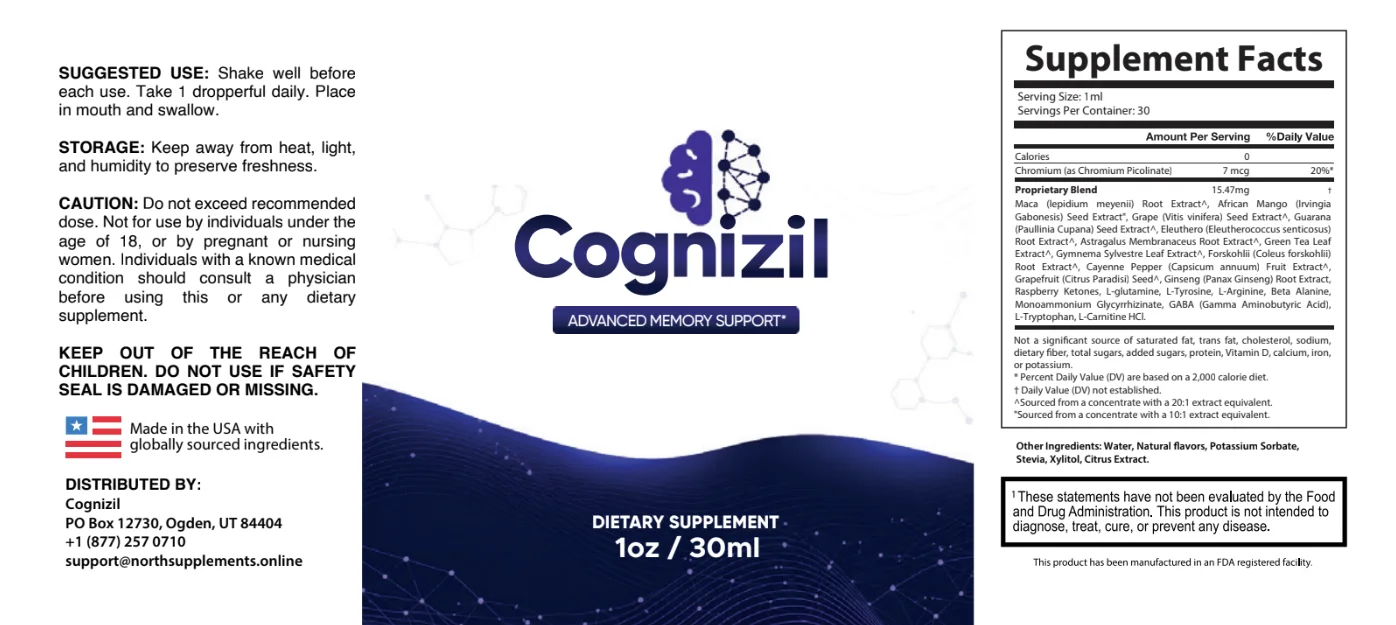
In Cognizil, GABA is one member of a 15.47 mg botanical and amino-acid blend, not the whole formula. It sits alongside maca root, green tea leaf with L-theanine, panax ginseng and L-tyrosine, with chromium (as chromium picolinate) on the label. The design logic is balance: pair drive-and-metabolism ingredients with one, GABA, that supports the calming side, so focus feels steady rather than strung-out. For the full story, see our guide to nootropic ingredients for focus and memory.
| Ingredient in Cognizil | Everyday role it plays | Calm or drive? |
|---|---|---|
| GABA | The body’s key calming amino acid; supports relaxed focus | Calm |
| Green tea leaf | Caffeine paired with the settling amino acid L-theanine | Both |
| L-Tyrosine | A building block for focus-related neurotransmitters | Drive |
| Panax ginseng | Traditional adaptogen for resilience and mental sharpness | Drive |
| Maca root | Andean botanical used for everyday energy and stamina | Drive |
| Chromium | Trace mineral supporting normal macronutrient metabolism | Support |
See the exact dose in Cognizil
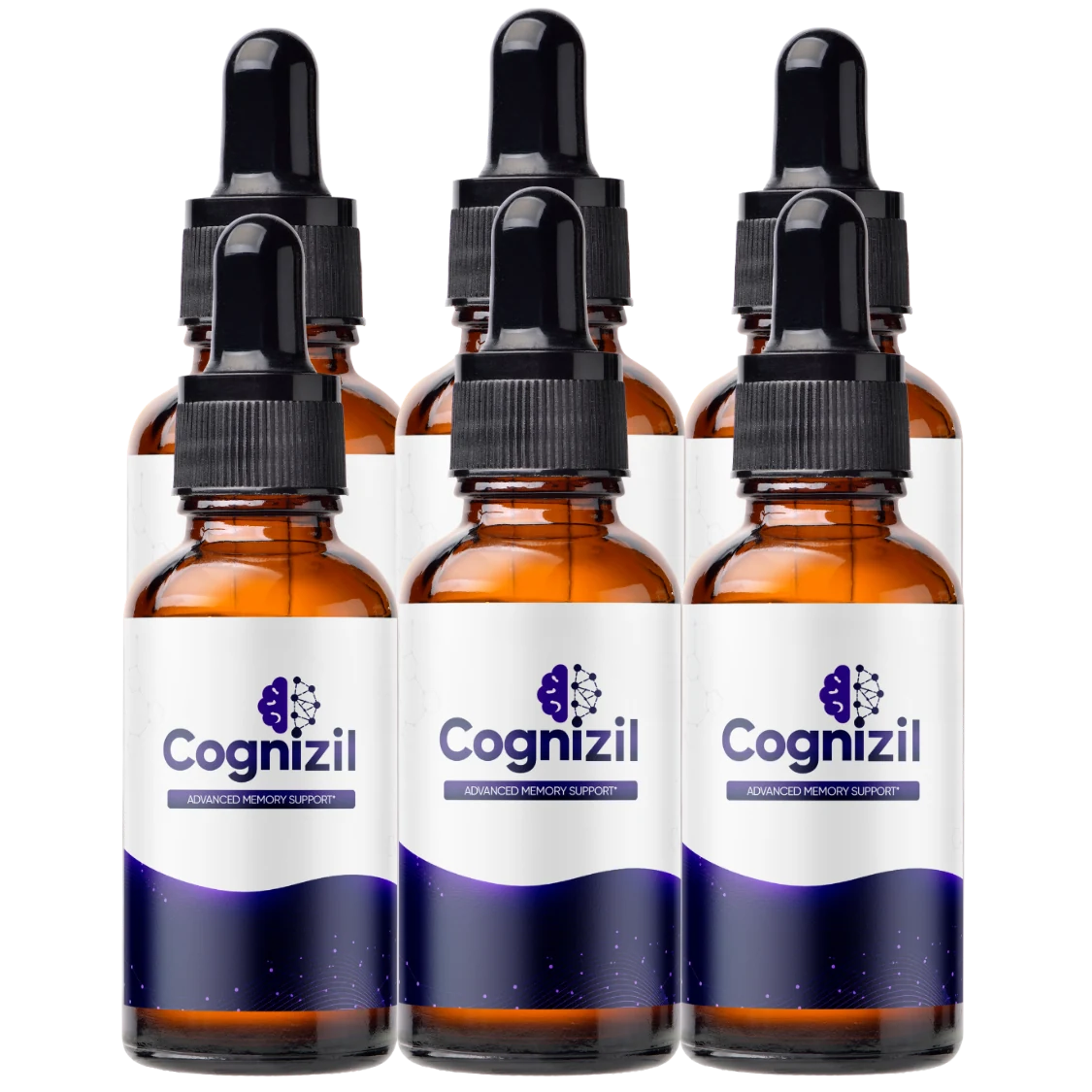
Cognizil is a once-daily dropper pairing chromium with a 15.47 mg blend that includes GABA, green tea and L-tyrosine. The six-bottle bundle is the best value at $49 per bottle, with free U.S. shipping and a 180-day guarantee.
Order Cognizil — from $49/bottleWhat does the evidence on GABA supplements really say?
Honesty first: the science on oral GABA is genuinely mixed, and this is where marketing tends to over-reach. Researchers have long debated how much orally taken GABA reaches the brain directly, since the blood-brain barrier limits what crosses into the central nervous system; a 2026 review in Nutrients summarises that unresolved question (Lu et al., Nutrients, 2026). Some studies report effects on relaxation and stress markers — a small trial found shifts in brain-wave measures of relaxation after an oral dose (Abdou et al., BioFactors, 2006), and another reported changes in mood during a mentally stressful task (Yoto et al., Amino Acids, 2012) — but these are small, short studies, and others are inconclusive.
What is fair to say is this: GABA has a plausible role in the body, a long history of use in calming blends, and a good tolerability record at the modest amounts used in supplements. What is not fair to say is that it is a proven treatment for anxiety, sleep disorders or any condition — it is not, and Cognizil makes no such claim. If a product promises dramatic, clinical-grade results from GABA alone, treat that as a red flag.
Is GABA supplementation safe?
For most healthy adults, GABA is well tolerated at the modest levels used in wellness formulas, and in Cognizil it appears as part of a once-daily dropper rather than a high isolated dose. That said, “natural” is not the same as “for everyone.” If you are pregnant or nursing, under 18, take any medication, or have a diagnosed condition, talk with your doctor before adding GABA or any new supplement; NCCIH keeps a plain-language summary of what is and is not known about supplements like this one (NCCIH).
How should you use GABA for calm focus day to day?
The best way to use a calming ingredient is as a consistent daily habit stacked on the basics, not as a rescue remedy. GABA supports a routine; it does not replace one. A few practical pointers:
- Take it at the same time daily — for Cognizil, one dropperful, shaken and swallowed, most often in the morning.
- Protect your sleep, which is the real foundation of calm attention; no ingredient outperforms a good night’s rest.
- Keep caffeine moderate and earlier so you are lowering noise, not stacking stimulation on top of it.
- Give it several weeks — botanicals and amino acids tend to build their support gradually.
For the broader habit picture, our guide on how to improve memory and focus naturally covers the sleep, food and movement levers that make any supplement work harder.
Who is calm-focus support actually for?
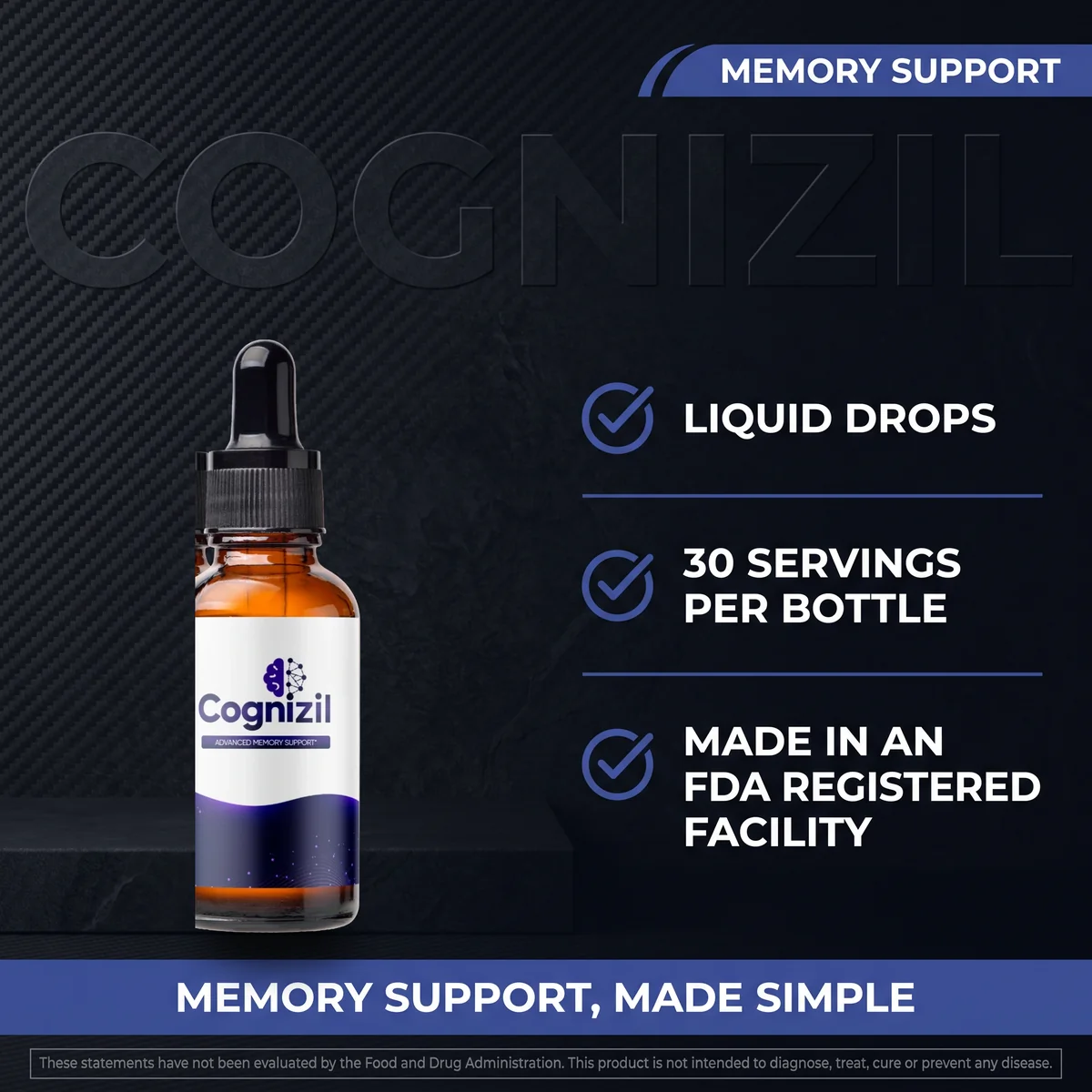
Calm focus is most useful for people whose problem is over-activation rather than low energy. If you spend your day already caffeinated, already busy, and a little frazzled — yet still find your attention scattered — then turning the background noise down tends to help more than another stimulant. Writers, busy parents and students in exam season often recognise the pattern.
When is it the wrong tool?
It is a poorer fit if your mornings are genuinely flat and sluggish; there, moderate caffeine or a brisk walk does more direct work. And it is never a substitute for care if you are dealing with persistent anxiety, insomnia or attention difficulties that disrupt daily life — those deserve a clinician, not a supplement bought online.
When should you talk to a doctor?
A calming supplement is for supporting everyday relaxation and focus, not for treating a medical condition. Speak with your doctor before starting GABA or Cognizil if you are pregnant or nursing, under 18, take medication, or have a diagnosed condition — and see a professional promptly if you experience persistent anxiety, ongoing sleep problems, or attention difficulties that interfere with daily life.
Frequently asked questions
What is GABA and what does it do?
GABA (gamma-aminobutyric acid) is the brain’s main calming neurotransmitter. It quiets over-active nerve signals, which is why it is associated with a relaxed, settled state rather than a wired one. In supplements it is used to support that sense of calm, not to treat any condition.
Does GABA in Cognizil help you focus?
GABA is part of Cognizil’s 15.47 mg botanical and amino-acid blend, included for its calming role. The idea is a settled kind of focus — fewer jitters and mental noise — rather than stimulant-style alertness. It supports a daily routine and is not a treatment for any condition.
How is calm focus different from a caffeine buzz?
Stimulants like caffeine push you into alertness, which can bring jitters and a later crash. Calm focus works the other way — by dialing down noise and tension so attention can settle. Many people find the two complement each other when caffeine is kept moderate.
Is GABA supplementation safe?
GABA is generally well tolerated at the modest amounts used in wellness blends, and it appears in Cognizil as part of a once-daily dropper. If you are pregnant or nursing, under 18, take medication, or have a health condition, ask your doctor before adding it.
How long does GABA take to work?
Some people notice a calmer baseline within a short time, while for others the support builds gradually over weeks of consistent daily use. Botanicals and amino acids tend to work best as a steady habit, and individual results vary.
Can I take GABA with coffee or tea?
For most people, yes. Cognizil also contains green tea, which pairs caffeine with the calming amino acid L-theanine. Keep total caffeine moderate and earlier in the day so calm focus is not undone by a poor night’s sleep.
Check today’s Cognizil pricing →
Cognizil is a dietary supplement, not a treatment for any medical condition. These statements have not been evaluated by the Food and Drug Administration. This product is not intended to diagnose, treat, cure or prevent any disease. Always consult a qualified healthcare professional about your individual needs.
References & further reading
- National Center for Complementary and Integrative Health (NCCIH). Dietary and Herbal Supplements — what the science says. nccih.nih.gov/health/dietary-and-herbal-supplements
- National Center for Complementary and Integrative Health (NCCIH). Green Tea. nccih.nih.gov/health/green-tea
- Lu WY, et al. Supplementation of γ-Aminobutyric Acid as a Functional Nutrient. Nutrients, 2026. pubmed.ncbi.nlm.nih.gov/42514458
- National Institutes of Health, Office of Dietary Supplements. Chromium — Fact Sheet for Health Professionals. ods.od.nih.gov/factsheets/Chromium-HealthProfessional
- Examine.com. GABA — evidence-based summary. examine.com/supplements/gaba
- Abdou AM, et al. Relaxation and immunity enhancement effects of gamma-aminobutyric acid (GABA) administration in humans. BioFactors, 2006. pubmed.ncbi.nlm.nih.gov/16971751
- Yoto A, et al. Oral intake of γ-aminobutyric acid affects mood and activities of central nervous system during stressed condition induced by mental tasks. Amino Acids, 2012. pubmed.ncbi.nlm.nih.gov/22203366
These references describe the ingredients in general terms and do not constitute evidence that any product treats, cures or prevents any condition.
Keep reading: how nootropic ingredients work · the best foods for brain health and memory · back to the Cognizil blog · the Cognizil review.