How to stay focused at work all day: the Cognizil playbook
To stay focused at work all day, structure the day into single-task sprints separated by real breaks, use daylight, movement, water and steady-energy meals to defend your attention, and protect the sleep that sets your baseline — then, if you choose, add a once-daily supporting step like Cognizil. Sustained focus is a routine you build, not a burst of willpower you summon.
How to stay focused at work all day, in one place.
- The short version
- Focus is a rhythm, not a marathon: work in 45–90 minute single-task sprints, break between them, and keep the phone out of reach.
- Fuel it right
- Morning daylight and a short walk, steady-energy meals over sugar spikes, and water on the desk keep the afternoon slump at bay.
- Protect the base
- A consistent seven-to-nine-hour night is the single biggest lever; no tactic survives a broken night’s sleep.
- Where supplements fit
- Nutrients such as chromium, L-tyrosine, panax ginseng and green tea can support the routine, but they are not a treatment for any condition.
Most of us do not lose a workday to distraction at once — we lose it in small leaks: a glance at a notification, a “quick” tab, a mid-afternoon fog that stretches a ten-minute task into forty. Below is a practical routine for holding concentration all day, built on evidence-led habits, with an honest note on where a botanical formula like Cognizil fits.

What does it actually mean to stay focused at work all day?
Staying focused at work all day means holding useful attention on one thing at a time across a full shift, instead of scattering it across interruptions until nothing feels finished. Sustained focus depends on cycling between concentrated effort and genuine recovery, so attention refills before it runs dry. Two ideas anchor everything below: protect your attention like a budget, and work with your body’s rhythm.
Why does focus fade during the workday?
Focus fades during the workday because attention is a limited resource that modern work spends quickly. Every notification, tab and “got a sec?” forces a costly mental switch, and laboratory research on task-switching measures a real performance cost each time attention moves (Alzahabi & Becker, Journal of Experimental Psychology: Human Perception and Performance, 2017). Stack a few dozen of those and the tank empties long before the clock says it should.
What causes the afternoon slump?
The classic post-lunch dip is partly biological — alertness naturally softens in the early afternoon — and partly self-inflicted, through a heavy, refined-carbohydrate lunch that spikes and then crashes blood sugar. Add a short night or a stressful morning and the slump arrives early — sleep-deprivation research shows how steeply performance falls when the night before is cut short (Pilcher & Huffcutt, Sleep, 1996). The reassuring part: most of these drivers are habits you can nudge the other way.
How do you structure a workday for sustained focus?
The most reliable way to structure a focused workday is to divide it into defined blocks of single-task effort separated by real breaks, and to defend those blocks from interruption. You are not concentrating harder for eight straight hours; you are building a sustainable rhythm.
1. Time-block the day into focused sprints
Give each important task a named block on the calendar — 45 to 90 minutes is a good range — and during that block do one thing only, with notifications silenced and the phone in another room. Time-blocking works because it removes the constant “what next?” decision and the mental switching that fragments attention. Start with your hardest task, while your focus reserve is fullest.
2. Take breaks that actually restore you
A break only helps if it is genuinely different from the work. Scrolling a feed keeps your visual attention loaded; standing up, looking out a window, stretching or refilling your water bottle lets it reset. A short pause every hour or so — the Pomodoro approach — keeps the second half of the day as sharp as the first.
3. Use light and movement as free focus tools
Daylight early in the day helps set the body clock that governs alertness, and even a ten-minute walk increases blood flow to the brain and lifts a foggy stretch; across the wider literature, regular activity is the habit with the most consistent cognitive evidence behind it (Singh et al., British Journal of Sports Medicine, 2025). Take a call while walking, or step outside between blocks. Movement is one of the few genuinely free ways to buy back concentration.
4. Eat and hydrate for steady energy
What you eat at your desk shows up in your focus an hour later. Meals built on protein, fibre and colour release energy slowly and dodge the spike-and-crash that fuels brain fog. Keep a water bottle within reach and sip through the day, since even mild dehydration measurably drags on concentration (Ganio et al., British Journal of Nutrition, 2011). If you rely on coffee, keep it moderate and earlier.
See the exact dose in Cognizil →
Where does a supplement like Cognizil fit into focus at work?
A focus supplement is a small supporting step, not the foundation — the routine above does the heavy lifting, and no dropper replaces sleep, breaks or good food. That said, a handful of nutrients have long been part of the focus-and-energy conversation, and several appear in Cognizil.
| Nutrient | Why it is discussed | Traditional / general role |
|---|---|---|
| Chromium | Essential trace mineral | Contributes to normal macronutrient metabolism — the steady energy processing behind an even workday. |
| L-Tyrosine | Amino acid | A building block for certain neurotransmitters; studied for supporting performance under everyday stress and pressure. |
| Panax ginseng | Adaptogen | A storied tonic used to support resilience, energy and mental sharpness through a demanding day. |
| Green tea | Polyphenols + L-theanine | Associated with a calm-yet-alert state that pairs well with sustained desk work. |
| GABA | Calming amino acid | One of the body’s key settling signals, popular in blends aimed at relaxed, unforced focus. |
Cognizil brings several of these together: chromium (as chromium picolinate) plus a 15.47 mg botanical and amino-acid blend of maca, green tea, panax ginseng, GABA and L-tyrosine — the last of which is studied specifically for holding performance together under pressure. For a deeper look, read our guide to nootropic ingredients for focus and memory, or see the full ingredients section.
Make focus a once-daily habit
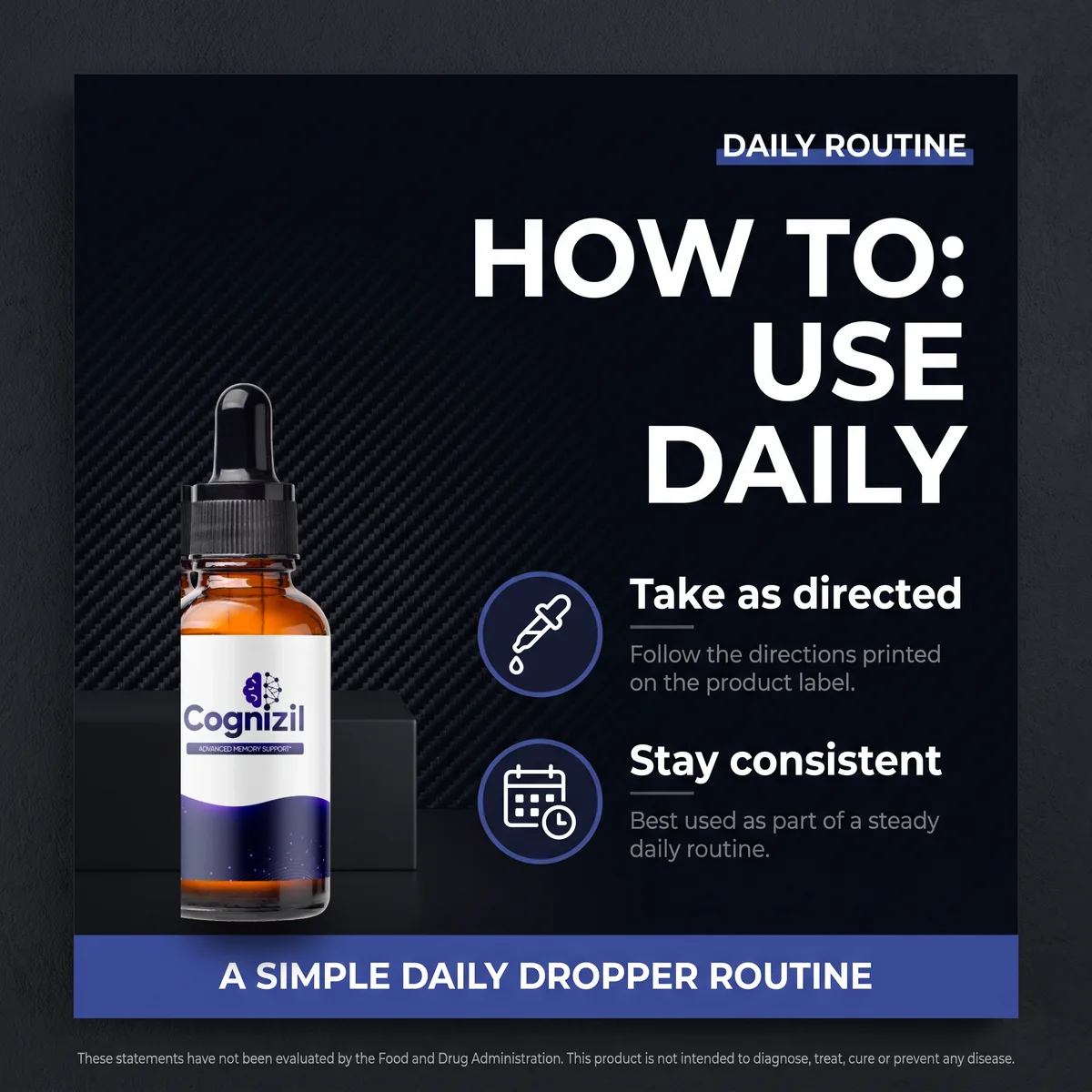
Cognizil is a once-daily dropper pairing chromium with a 15.47 mg botanical and amino-acid blend. The six-bottle bundle is the best value at $49 per bottle, with free U.S. shipping and a 180-day guarantee.
Check today’s Cognizil pricing — from $49/bottleWhat does an ideal focused workday look like?
An ideal focused workday is one where deep work happens early, breaks are deliberate, and your energy is defended rather than left to chance. Stack one habit at a time until each runs on autopilot:
- Get daylight and a short walk soon after waking to set your alertness for the day.
- Start with the hardest task in a protected 60–90 minute block, phone out of reach.
- Break for real between blocks — stand, stretch, look far away, refill your water.
- Eat a steady-energy lunch of protein, fibre and colour to skip the sugar crash.
- Batch shallow work — email, messages, admin — into set windows.
- Take any supplement at the same time daily — for Cognizil, one dropperful, shaken and swallowed.
Which focus habits work fastest? An at-a-glance table
A “fast” habit is one you feel within the same day; a “slow” habit reshapes your baseline over weeks. Both matter for staying focused all day. This table sorts the core habits by how quickly they help and how much effort they ask.
| Focus habit | Typical time to notice | Everyday effort |
|---|---|---|
| Time-blocking & phone away | Same session | Low |
| Real breaks between sprints | Same day | Low |
| Morning daylight & a short walk | Same day | Low |
| Water instead of a sugary drink | Same day | Low |
| Steady-energy meals | Days to weeks | Medium |
| Consistent seven-to-nine-hour sleep | Next day, compounding | Medium |
Consistency turns any of these into a steadier month. Botanicals build their support gradually, so most people choose a multi-month supply — compare the packages and pricing on the homepage.

Is coffee helping or hurting your focus at work?
Coffee genuinely helps alertness, but timing decides whether it helps or hurts. Keep caffeine moderate, drink it earlier in the day, and pair each cup with water and food so it lifts you without stealing the sleep that sets tomorrow’s focus. Green tea is a gentler alternative, pairing caffeine with the calming amino acid L-theanine.
When should you talk to a doctor?
A focus routine is for supporting everyday concentration; it is not a replacement for medical care. Speak with your doctor if you are pregnant or nursing, under 18, take any medication, have a diagnosed condition, or notice persistent trouble concentrating that disrupts daily life, ongoing fatigue, or sudden changes in thinking.
Frequently asked questions
How can I stay focused at work all day?
Work in focused single-task sprints of 45 to 90 minutes, take a real break between them, get daylight and a short walk in the morning, and eat steady-energy meals with water on your desk. Protect your sleep the night before, and add any supplement, such as Cognizil, at the same time each day as a supporting step.
Why do I lose focus in the afternoon?
Afternoon focus dips are driven by a natural drop in alertness after lunch, blood-sugar swings from refined-carbohydrate meals, accumulated mental fatigue from task-switching, and a short or restless night. A walk, water and daylight usually lift it faster than more coffee.
Does time-blocking really improve concentration at work?
For most people, yes. Giving one task a defined block with notifications off removes the costly mental switching that fragments attention, so the same hours produce more focused work. It is a habit you can feel the same day.
How does Cognizil help you focus at work naturally?
Cognizil is a once-daily liquid nootropic that pairs chromium with a 15.47 mg botanical and amino-acid blend of maca, green tea, panax ginseng, GABA and L-tyrosine. It is a support to sleep, breaks and nutrition, not a treatment for any condition, and medication users should ask a doctor first.
Is coffee good or bad for focus at work?
Coffee genuinely helps alertness when used well. Keep caffeine moderate, drink it earlier in the day, and pair it with water and food so it lifts you without stealing the sleep that matters even more for next-day focus.
How long does it take to build a focused workday routine?
Structural habits like time-blocking, breaks and daylight help the same day, while diet, fitness and consistent sleep reshape your baseline over several weeks. Botanicals build their support gradually, and individual results vary.
Try Cognizil with the 180-day guarantee →
Cognizil is a dietary supplement, not a treatment for any medical condition. These statements have not been evaluated by the Food and Drug Administration. This product is not intended to diagnose, treat, cure or prevent any disease. Always consult a qualified healthcare professional about your individual needs.
References & further reading
- MedlinePlus / U.S. National Library of Medicine. Sleep and your health. medlineplus.gov/healthysleep.html
- Alzahabi R, Becker MW. Investigating the relationship between media multitasking and processes involved in task-switching. Journal of Experimental Psychology: Human Perception and Performance, 2017. pubmed.ncbi.nlm.nih.gov/28406687
- National Institutes of Health, Office of Dietary Supplements. Chromium — Fact Sheet for Health Professionals. ods.od.nih.gov/factsheets/Chromium-HealthProfessional
- National Center for Complementary and Integrative Health (NCCIH). Green Tea. nccih.nih.gov/health/green-tea
- Examine.com. L-Tyrosine — evidence-based summary. examine.com/supplements/l-tyrosine
- Mayo Clinic. Exercise and stress: Get moving to manage stress. mayoclinic.org/exercise-and-stress
- Pilcher JJ, Huffcutt AI. Effects of sleep deprivation on performance: a meta-analysis. Sleep, 1996. pubmed.ncbi.nlm.nih.gov/8776790
- Singh B, et al. Effectiveness of exercise for improving cognition, memory and executive function: a systematic umbrella review and meta-meta-analysis. British Journal of Sports Medicine, 2025. pubmed.ncbi.nlm.nih.gov/40049759
- Ganio MS, et al. Mild dehydration impairs cognitive performance and mood of men. British Journal of Nutrition, 2011. pubmed.ncbi.nlm.nih.gov/21736786
These references describe the ingredients and habits in general terms and do not constitute evidence that any product treats, cures or prevents any condition.
Keep reading: how to improve memory and focus naturally · the best foods for brain health and memory · back to the Cognizil blog · homepage.